Kashmir Crisis – 2025: A Brief Analytical Report
The region of Jammu and Kashmir has once again become the epicenter of conflict between India and Pakistan. The latest escalation was triggered by a terrorist attack carried out on April 22, 2025 in the Pahalgam district. The armed assault resulted in the deaths of 26 individuals, including 25 Indian citizens and one Nepalese national. Such incidents have significantly heightened tensions in the region and raised concerns within the international community.
Politics
06.05.2025, 14:19
Share:
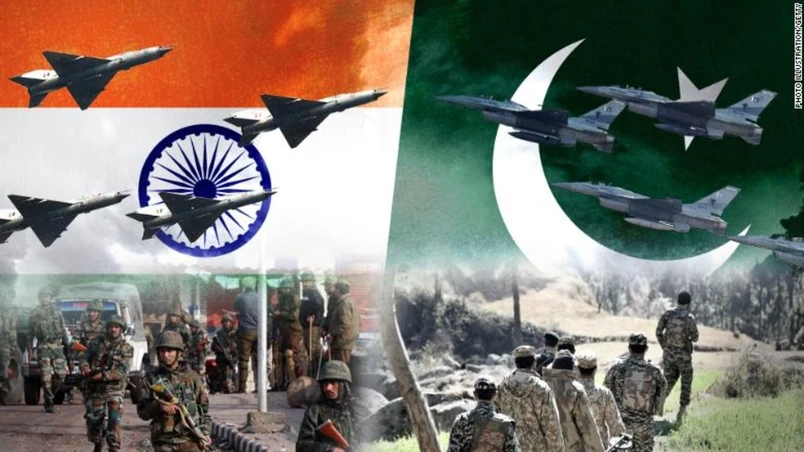
Кашмир инқирози – 2025: Қисқа таҳлилий ҳисобот
The responsibility for the attack was claimed by the organization "Kashmir Resistance" via a social media post. Indian authorities classify this group as a terrorist organization and associate it with the international extremist group "Lashkar-e-Taiba," which is banned in India. Reports indicate that among the suspects involved in the attack are three individuals, two of whom are allegedly Pakistani citizens. Official New Delhi has also claimed to possess evidence of Pakistani intelligence agencies’ involvement in orchestrating the attack, though Islamabad vehemently denies these allegations. This situation has further strained the already tense bilateral relations between India and Pakistan.
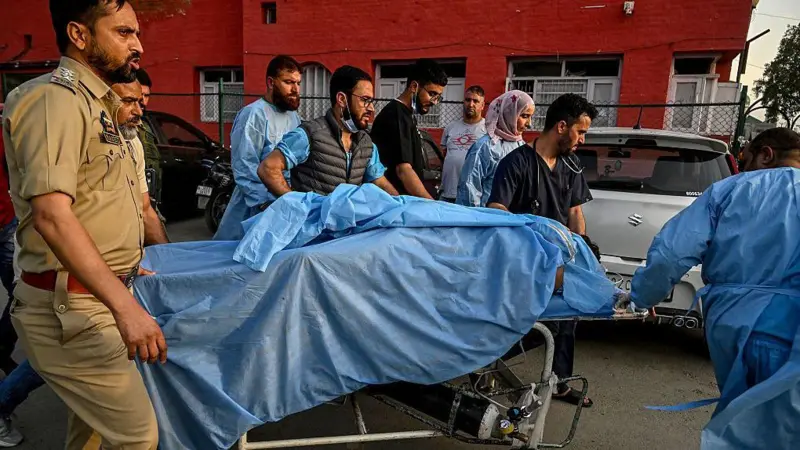
Foto: BBC
India’s Response
- In response to the attack, the Indian government launched a large-scale counterterrorism operation in the region. During the raids, over 1,500 individuals were detained for questioning. Authorities also reported the demolition of at least 10 residential buildings belonging to suspects linked to the attack. The demolitions, in some cases carried out using explosives, have sparked concerns among the local population and exacerbated the situation.
- New Delhi has exerted diplomatic and border pressure on Islamabad, including the closure of a key land border crossing – the Attari-Wagah checkpoint.
- Furthermore, India suspended the provisions of the Visa-Free Program under the South Asian Association for Regional Cooperation (SAARC) for Pakistani citizens. Additionally, Indian authorities demanded that military, naval, and air advisors accredited to the Pakistani High Commission in New Delhi leave the country.
- India also suspended its participation in the Indus Waters Treaty – a key international agreement signed in 1960 that regulates the distribution of transboundary water resources between India and Pakistan. Under the new measures, India completely blocked four hydrotechnical nodes supplying water to Pakistan through a system of dams and irrigation canals.
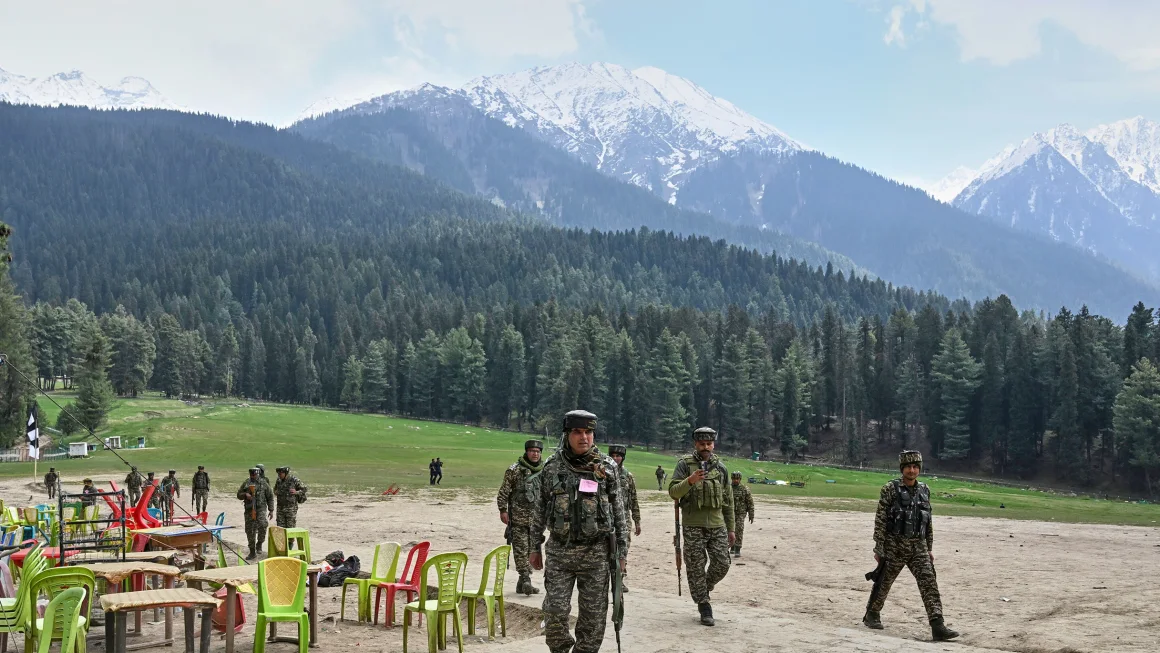
Foto: AP
5.The Indian Armed Forces have intensified military activity in the region. In an official statement published by the Indian Navy on platform "X," the military announced the conduct of training anti-ship missile drills, aimed at "confirming and demonstrating the readiness of platforms, systems, and crews to deliver high-precision offensive strikes from long distances."
6. Concurrently, Indian ground forces reported shelling of their border posts by Pakistani armed formations along the Line of Control in Jammu and Kashmir. Indian forces retaliated with return fire.
In New Delhi and several other major cities, mass anti-Pakistani demonstrations took place, accompanied by a surge in anti-Muslim and anti-Kashmiri sentiments. These events have raised concerns about the potential further marginalization of the Muslim population.
Against this backdrop, criticism of the Indian central government has intensified. Opposition leaders, including Rahul Gandhi, have accused the authorities of attempting to portray the situation in Kashmir as normalized despite ongoing instability.
Pakistan’s Response
The Pakistani government categorically denied any involvement in the Pahalgam terrorist attack and sharply criticized India’s decision to suspend the Indus Waters Treaty. Islamabad characterized any attempts to block access to transboundary water resources as an act of war. Government representatives emphasized that the country is facing a severe water deficit.
Pakistani Prime Minister Shehbaz Sharif issued a statement accusing India of making baseless allegations and expressing Islamabad’s readiness to participate in a neutral, transparent, and credible international investigation into the incident. Pakistani authorities proposed the involvement of external actors, such as Russia and China, as well as Western countries, in forming an international investigative team.
Pakistan has taken the following measures:
- Islamabad demanded that all Indian citizens residing in Pakistan under special visas under the SAARC Visa-Free Program leave the country.
- Simultaneously, Pakistan announced a complete suspension of trade operations with India, including the transit of Indian exports through Pakistani territory to third countries such as Afghanistan. This decision affects both formal and informal cross-border trade, including critical supplies of food and medicine.
- Additionally, Pakistan closed its airspace to Indian airlines, which may result in longer routes for certain international flights, particularly to Central Asia, Russia, Europe, and the Middle East.
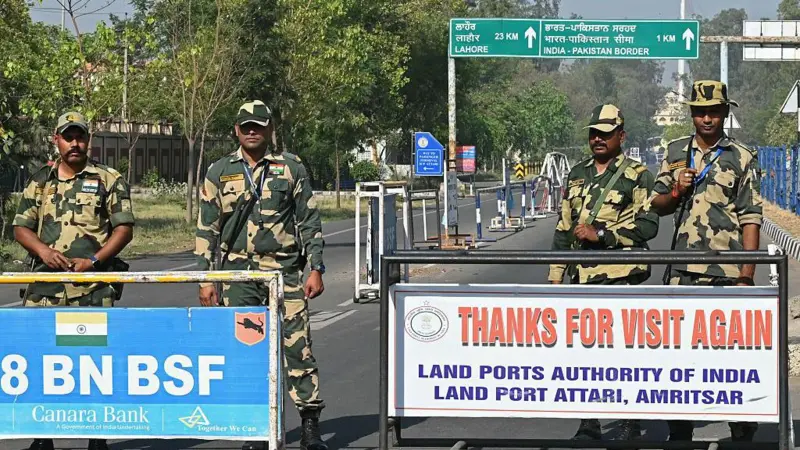
Foto: BBC
Pakistan currently holds a non-permanent seat on the UN Security Council, lending additional international weight to its actions and statements.
International Community’s Response
The attack in Pahalgam elicited a broad international response, with India garnering support from the global community.
The United Nations expressed deep concern over the escalation of the India-Pakistan crisis, urging both sides to exercise maximum restraint and prevent further conflict escalation.
Western nations, including the United States and France, declared solidarity with India in the fight against international terrorism. A similar stance was adopted by some Arab countries, notably Saudi Arabia and the United Arab Emirates, which demonstrated political support for India amid the current crisis.
Condemnation of the Pahalgam terrorist attack was also voiced by leaders of several other states, including members of the European Union, Russia, Ukraine, Israel, and others.
Iran’s Mediation
Amid rising tensions, the Iranian government expressed concern and initiated consultations with both sides of the conflict. Iranian Foreign Minister Abbas Araghchi publicly offered mediation, emphasizing the need for dialogue and peaceful resolution. Tehran’s call for de-escalation was perceived as an attempt to strengthen the diplomatic dimension of the international response and propose an alternative to militarized scenarios.
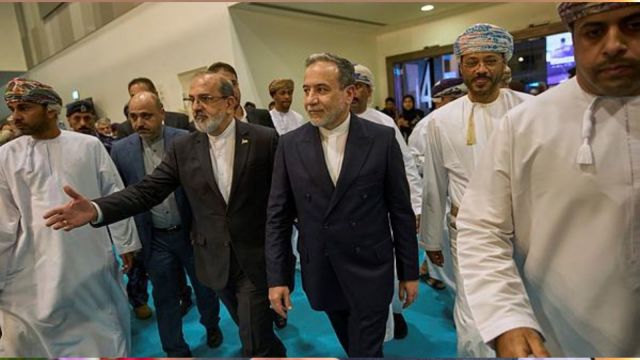
Foto: AP
Iran traditionally maintains close cooperation with India in the energy sector, particularly in oil and gas exports. Additionally, the strategically important Chabahar Port, developed with Indian participation, is seen as part of the International North-South Transport Corridor, enhancing the geo-economic significance of Iran-India relations. At the same time, Iran has historically expressed support for Pakistan on the Kashmir issue in the spirit of Islamic solidarity, while Islamabad, in turn, has demonstrated understanding of Tehran’s stance on the situation in Balochistan – a sensitive border region with high separatist activity.
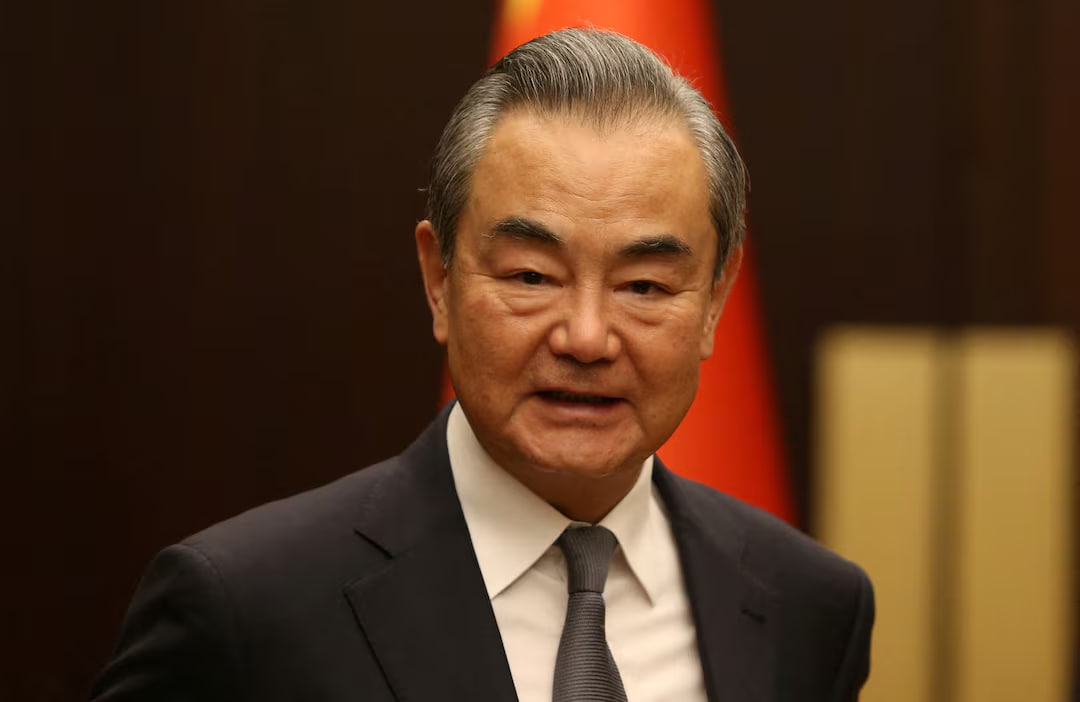
Foto: Reuters
China’s Position
Against the backdrop of sharply deteriorating relations with India, Pakistani Foreign Minister Muhammad Ishaq Dar held a phone conversation with his Chinese counterpart Wang Yi, during which he detailed the current situation. Wang Yi expressed support for Pakistan, noting that Beijing understands Islamabad’s legitimate security concerns and backs efforts to protect sovereignty and national interests. Such language reflects the enduring nature of the China-Pakistan strategic partnership, particularly in the context of long-standing cooperation under the China-Pakistan Economic Corridor (CPEC) project, as well as aligned positions on several regional issues, including the balance of power in South Asia. By offering diplomatic support, China may further strengthen its economic and strategic presence in Pakistan.
Future Scenarios
1.In response to the terrorist attack, Indian authorities may take targeted measures against terrorist groups, including strikes on their infrastructure and leadership, potentially even beyond its borders. A more radical scenario involving strikes on Pakistani military installations could lead to direct interstate confrontation, escalating beyond a localized crisis.
2. Pakistan, meanwhile, aims to resolve the issue through mediation and international support. Pakistani Defense Minister Khawaja Asif confirmed that Pakistan has no plans for military escalation or initiating armed conflict with India. However, he stated that any offensive actions by India would be met with a symmetrical response. This stance demonstrates Pakistan’s desire to minimize the risk of direct interstate conflict while reserving the right to retaliate in case of military provocation.
3.The escalation of the Kashmir crisis could negatively impact the prestige and effectiveness of the Shanghai Cooperation Organization (SCO), where both India and Pakistan are full members.
4.The conflict may transition into a phase of proxy confrontation through support for separatist movements. The worsening situation in Kashmir could push India to covertly support Baloch nationalist groups operating in Pakistan’s Balochistan province, potentially destabilizing Pakistan’s internal security. However, the current crisis has also led to a consolidation of Pakistan’s political and public elites around the perceived external threat from India. Public statements have even included sarcastic gratitude from Defense Minister Khawaja Asif to Prime Minister Modi for "uniting the country."
5. Islamabad, seeking to "secure its rear," may tactically soften its confrontation with Afghanistan, with which relations have been strained in recent years. This emerging confrontation could reshape regional alliance dynamics: if India moves first to establish working relations with Kabul, Pakistan risks finding itself geopolitically encircled by both India and Afghanistan. This creates an additional incentive for Islamabad to pursue more flexible regional diplomacy and expand its strategic depth buffer.
The escalation in Jammu and Kashmir following the Pahalgam terrorist attack has become a severe test for the stability of the entire regional security system. Despite isolated mediation efforts, particularly by Iran, tensions between India and Pakistan remain high, and diplomatic initiatives have yet to yield significant results.
Any further deterioration of the situation in the region risks not only large-scale destabilization in South Asia but also disruption of the global strategic balance, especially given the nuclear status of both countries. Moreover, the conflict undermines the potential of multilateral platforms such as the SCO, calling into question their ability to serve as effective mechanisms for resolving regional crises.
Islomkhon Gafarov, Bobur Mingyasharov, Bositkhon Islamov
Center for Afghanistan and South Asia Studies (CASAS)
Institute for Advanced International Studies (IAIS)
Similar news

Nearly 1 Billion Children Experience Violence Every Year Worldwide — WHO
World
20.10.2026, 16:40

Are EV prices about to rise?
Economy
14.10.2026, 16:59

Trump Warns of Further Action Against Iran
World
14.10.2026, 15:25

The most discontented generation
Cultural
12.10.2026, 10:05

Trump’s remarks on Los Angeles and San Diego spark backlash
Politics
07.10.2026, 15:25

Trump says Iran deal could be reached after US elections
World
23.09.2026, 10:20
Popular news

"Uzbek" in headlines: How are crimes abroad affecting Uzbekistan's image?
Uzbekistan
08.10.2026, 14:31

Uzbekistan to Host Major UN Congress in 2031
Politics
29.09.2026, 11:23

The Sirojiddin Odilov case: why do citizens turn to bloggers for help?
Uzbekistan
07.10.2026, 18:38

80 percent of Central Asia’s intra-regional exports come from Uzbekistan and Kazakhstan
Economy
02.10.2026, 16:40

Russia has started a new mobilization – Zelenskyy
World
29.09.2026, 11:27

Uzbekistan Increases Fines for Underage Marriages and Religious Ceremonies
Uzbekistan
15.10.2026, 16:35
Latest news

What Is the State of Freedom of Speech in Uzbekistan?
Uzbekistan
26.10.2026, 13:15

Trump again says the US could “abandon” Europe
Politics
23.10.2026, 11:30

Zelenskyy: Kyiv is ready for a ceasefire
Politics
22.10.2026, 17:53

Kazakhstan to undertake major military reforms after Caspian tragedy
World
22.10.2026, 11:12

Uzbekistan signs law to improve the Uzbek latin alphabet
Education
21.10.2026, 14:48

Kazakhstan drops criminal case against rapper Navai and deports him
Cultural
21.10.2026, 14:21
Nearly 1 Billion Children Experience Violence Every Year Worldwide — WHO
World
20.10.2026, 16:40

Uzbekistan and the United States Sign 54 Agreements Worth $12 Billion
Economy
20.10.2026, 10:27

Uzbekistan establishes special procedure for prosecuting officials with immunity
Uzbekistan
17.10.2026, 14:01

Who Could Replace Netanyahu? What Israel’s Opposition Leaders Stand For
Politics
17.10.2026, 10:37
Uzbekistan Increases Fines for Underage Marriages and Religious Ceremonies
Uzbekistan
15.10.2026, 16:35

Turkish Rapper Lvbel C5 Ordered to Study Turkish Literature
World
15.10.2026, 14:52

Ukraine Restricts Starlink Operations — Musk Responds
World
15.10.2026, 11:18
Are EV prices about to rise?
Economy
14.10.2026, 16:59
Trump Warns of Further Action Against Iran
World
14.10.2026, 15:25

37 detained during protests over new school uniform rules in Azerbaijan
World
13.10.2026, 11:48

Al-Nassr Beat Neftchi 3–1 as Ronaldo Gets on the Scoresheet
Sport
13.10.2026, 09:58

Diplomat Says Ukraine Could Be Divided
World
13.10.2026, 09:19
The most discontented generation
Cultural
12.10.2026, 10:05

US proposes fees of up to $100,000 for international students seeking practical training
World
08.10.2026, 14:43
Popular news
"Uzbek" in headlines: How are crimes abroad affecting Uzbekistan's image?
Uzbekistan
08.10.2026, 14:31
Uzbekistan to Host Major UN Congress in 2031
Politics
29.09.2026, 11:23
The Sirojiddin Odilov case: why do citizens turn to bloggers for help?
Uzbekistan
07.10.2026, 18:38
80 percent of Central Asia’s intra-regional exports come from Uzbekistan and Kazakhstan
Economy
02.10.2026, 16:40
Russia has started a new mobilization – Zelenskyy
World
29.09.2026, 11:27
Uzbekistan Increases Fines for Underage Marriages and Religious Ceremonies
Uzbekistan
15.10.2026, 16:35